
Gutters
Box Gutters on Cincinnati's Older Homes: What to Know
September 11, 2026
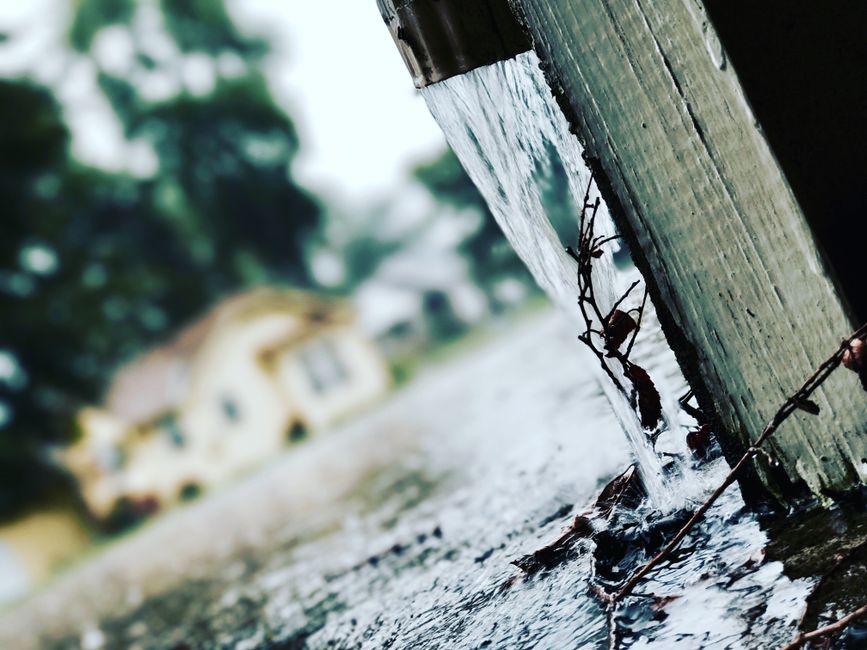
What a Box Gutter Actually Is
Most gutters are external: a formed channel fastened to the fascia, visible from the ground, straightforward to replace. A box gutter is different. It sits inside the roof structure itself, built into a trough formed by the rafters and roof deck before the finished roofing goes on. From the street, the roofline often looks solid — the water disappears somewhere inside it.
That design was standard on residential construction through the early twentieth century, and Greater Cincinnati retains a large share of that housing stock. Neighborhoods like Hyde Park, Clifton, Northside, and Price Hill still have homes built with box gutters and steep pitches originally designed for slate. The systems worked well when maintained. The problem is that many have not been.
How They Work — and Where They Fail
A box gutter is lined with a waterproof membrane — historically lead, copper, or galvanized steel, more recently EPDM rubber or fiberglass. That liner sits on a wood substrate: the bottom and sides of the trough. Water runs across the liner and exits through one or more outlets that connect to downspouts.
The weak points are predictable:
- Liner failure. Metal liners corrode. Rubber liners crack and pull at seams over time. Once the liner fails, water moves directly into the wood substrate beneath it.
- Rotted substrate. When water reaches the wood trough, rot follows. On a box gutter, that rot is structural — it is part of the roofline, not a separate hanger. Replacing it means opening the roof from above or the cornice from below, sometimes both.
- Clogged outlets. Box gutters typically drain through a single outlet at one end. One clogged outlet backs water up the full length of the trough. The liner holds it — until it does not.
- Ice damming. Cincinnati's freeze-thaw cycling hits box gutters hard. Water trapped in the trough freezes, expands against the liner, then thaws and moves. That cycle works seams loose faster than almost anything else.
Signs a Box Gutter Is Failing
The damage is often invisible until it is expensive. A few things worth watching:
- Water stains on interior ceilings near the eaves, especially in upstairs rooms or under a finished attic
- Paint peeling or bubbling on the cornice or soffit below the gutter line
- Soft spots in the roof deck near the eaves found during a roofing inspection
- Standing water visible in the trough well after rain — a sign the outlet is blocked or the slope has shifted
- Visible gaps or lifted seams in a metal or rubber liner
Because the trough sits inside the roof structure, leaks often travel before they surface. The water entry point and the stain on the ceiling are rarely directly above each other.
Repair, Reline, or Convert
When a box gutter needs attention, there are three paths.
Spot repair makes sense when the liner is otherwise sound and the failure is limited — a lifted seam, a small crack, a blocked outlet. The substrate must be solid for a repair to hold long-term.
Full relining is the right call when the liner is past its service life but the substrate remains structurally sound. A contractor removes the old liner, addresses any compromised wood, and installs a new membrane — typically EPDM, copper, or fiberglass depending on the application.
Conversion to a hung gutter is sometimes proposed and can work — but it changes the look of the roofline permanently. On a home with historic character or HOA restrictions, that may not be an option. Ask your contractor to evaluate the substrate before treating conversion as a shortcut around liner work.
What Ongoing Maintenance Looks Like
A functioning box gutter needs the same basic attention as any gutter: outlets clear, no standing water after rain, liner inspected periodically. The difference is access. Most liner work sits inside the roof structure, and an improper patch can make the problem worse. Most homeowners are limited to clearing outlet debris; everything else calls for a contractor familiar with built-in gutter systems.
On the steep-pitch homes common to older Cincinnati neighborhoods, the box gutter and the roof are inseparable systems. A liner that fails does not just shed water elsewhere — it begins degrading the structure around it. Catching the problem early, before the substrate rots through, is what keeps the repair proportionate to the damage.
Ready to get it looked at?
Tell us what's going on and we'll set up a time to come out.